Department
Rock tumbling grit by grade
Use the grit number and the abrasive material to choose a refill. Stage names vary by supplier. In one four-stage rotary sequence the second cut uses 180/220 silicon carbide, while the final step uses aluminum oxide.
Shop this department
Choose rock tumbling grit by stage-
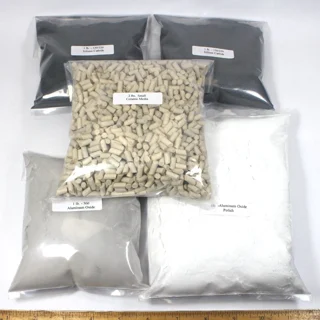 Rock Shed vibratory grit pack with small ceramics
Medium grit, fine pre-polish, aluminum oxide polish and small ceramic filler.
$36.00Nov 9, 26, 02:21 PM · New YorkAdd to cartPrice info
This is a monthly price snapshot supplied by Rainforest, not a live quote. Product prices and availability are accurate as of the date/time indicated and are subject to change. Any price and availability information displayed on Amazon.com at the time of purchase will apply to the purchase of this product.
Opens the product on Amazon. Payment takes place on Amazon.
-
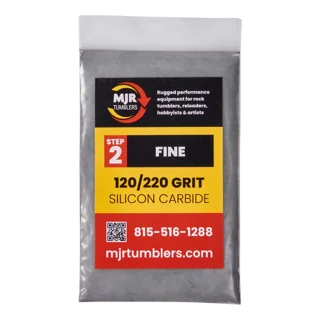 MJR 120/220 silicon carbide refill, 1 lb
Stage 2 pouch explicitly labeled 120/220 silicon carbide.
$14.75Nov 9, 26, 02:22 PM · New YorkAdd to cartPrice info
This is a monthly price snapshot supplied by Rainforest, not a live quote. Product prices and availability are accurate as of the date/time indicated and are subject to change. Any price and availability information displayed on Amazon.com at the time of purchase will apply to the purchase of this product.
Opens the product on Amazon. Payment takes place on Amazon.
-
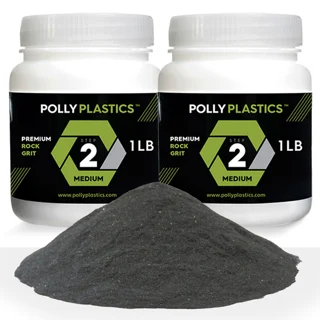 Polly Plastics 180/220 silicon carbide refill, 2 lb
Stage 2 medium 180/220 silicon carbide, two 1 lb jars.
$22.99Nov 9, 26, 02:22 PM · New YorkAdd to cartPrice info
This is a monthly price snapshot supplied by Rainforest, not a live quote. Product prices and availability are accurate as of the date/time indicated and are subject to change. Any price and availability information displayed on Amazon.com at the time of purchase will apply to the purchase of this product.
Opens the product on Amazon. Payment takes place on Amazon.
-
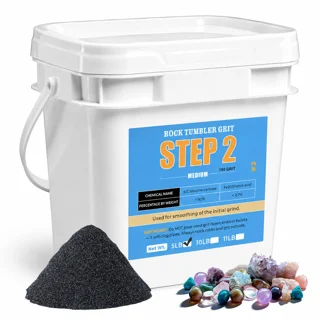 KomeStone 150-grit silicon carbide refill, 5 lb
Five pounds of 150-grit silicon carbide for the second cut.
$27.53Nov 9, 26, 03:16 PM · New YorkAdd to cartPrice info
This is a monthly price snapshot supplied by Rainforest, not a live quote. Product prices and availability are accurate as of the date/time indicated and are subject to change. Any price and availability information displayed on Amazon.com at the time of purchase will apply to the purchase of this product.
Opens the product on Amazon. Payment takes place on Amazon.
-
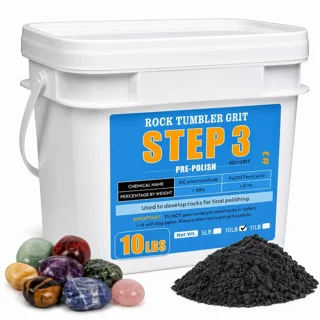 KoolStone 600-grit silicon carbide pre-polish, 10 lb
Ten pounds of 600-grit silicon carbide pre-polish.
$38.98Nov 9, 26, 03:17 PM · New YorkAdd to cartPrice info
This is a monthly price snapshot supplied by Rainforest, not a live quote. Product prices and availability are accurate as of the date/time indicated and are subject to change. Any price and availability information displayed on Amazon.com at the time of purchase will apply to the purchase of this product.
Opens the product on Amazon. Payment takes place on Amazon.
-
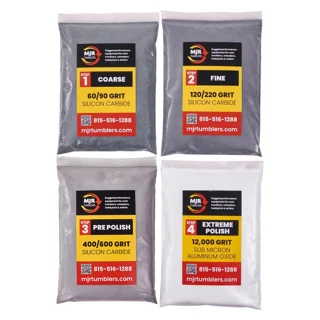 MJR four-stage grit refill for 3 lb barrels
60/90, 120/220, 400/600 and 12,000 aluminum oxide.
$14.99Nov 9, 26, 03:17 PM · New YorkAdd to cartPrice info
This is a monthly price snapshot supplied by Rainforest, not a live quote. Product prices and availability are accurate as of the date/time indicated and are subject to change. Any price and availability information displayed on Amazon.com at the time of purchase will apply to the purchase of this product.
Opens the product on Amazon. Payment takes place on Amazon.
-
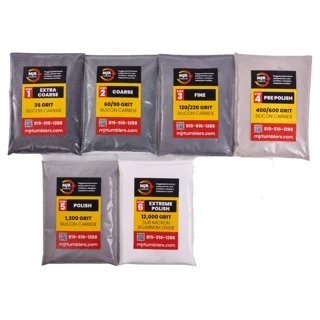 MJR six-stage rock tumbling grit refill
Six documented grades include an extra-coarse start and two final polishing grades.
$20.99Nov 9, 26, 03:18 PM · New YorkAdd to cartPrice info
This is a monthly price snapshot supplied by Rainforest, not a live quote. Product prices and availability are accurate as of the date/time indicated and are subject to change. Any price and availability information displayed on Amazon.com at the time of purchase will apply to the purchase of this product.
Opens the product on Amazon. Payment takes place on Amazon.
-
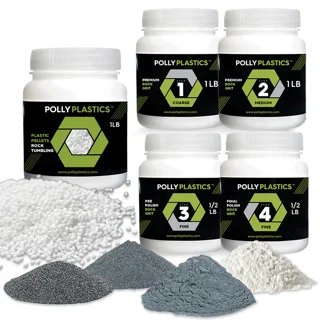 Polly Plastics four-stage grit kit with plastic filler
Four grit grades plus one pound of polypropylene filler.
$36.99Nov 9, 26, 03:19 PM · New YorkAdd to cartPrice info
This is a monthly price snapshot supplied by Rainforest, not a live quote. Product prices and availability are accurate as of the date/time indicated and are subject to change. Any price and availability information displayed on Amazon.com at the time of purchase will apply to the purchase of this product.
Opens the product on Amazon. Payment takes place on Amazon.
-
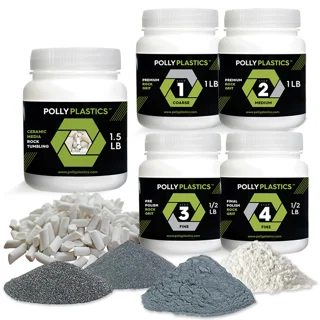 Polly Plastics four-stage grit kit with ceramic filler
Four grades with 1.5 lb of small ceramic filler.
$35.49Nov 9, 26, 03:19 PM · New YorkAdd to cartPrice info
This is a monthly price snapshot supplied by Rainforest, not a live quote. Product prices and availability are accurate as of the date/time indicated and are subject to change. Any price and availability information displayed on Amazon.com at the time of purchase will apply to the purchase of this product.
Opens the product on Amazon. Payment takes place on Amazon.
-
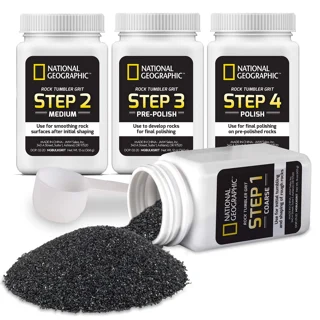 National Geographic four-stage bulk grit refill
Four-stage NGBULKGRIT refill with separately labeled containers.
$24.99Nov 9, 26, 03:20 PM · New YorkAdd to cartPrice info
This is a monthly price snapshot supplied by Rainforest, not a live quote. Product prices and availability are accurate as of the date/time indicated and are subject to change. Any price and availability information displayed on Amazon.com at the time of purchase will apply to the purchase of this product.
Opens the product on Amazon. Payment takes place on Amazon.
-
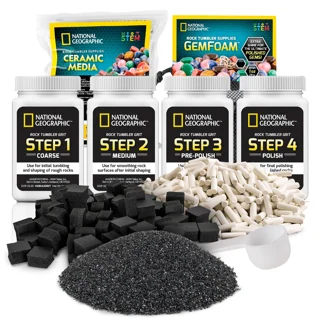 National Geographic grit, ceramic media and GemFoam kit
Media-only bundle includes grit, ceramic filler and separate GemFoam.
$39.99Nov 9, 26, 04:18 PM · New YorkAdd to cartPrice info
This is a monthly price snapshot supplied by Rainforest, not a live quote. Product prices and availability are accurate as of the date/time indicated and are subject to change. Any price and availability information displayed on Amazon.com at the time of purchase will apply to the purchase of this product.
Opens the product on Amazon. Payment takes place on Amazon.
-
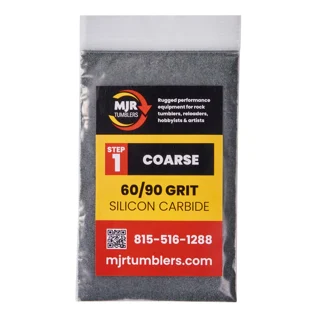 MJR 60/90 silicon carbide coarse grit
60/90 coarse abrasive, clearly distinct from the 36-grade cut.
$14.76Nov 9, 26, 04:19 PM · New YorkAdd to cartPrice info
This is a monthly price snapshot supplied by Rainforest, not a live quote. Product prices and availability are accurate as of the date/time indicated and are subject to change. Any price and availability information displayed on Amazon.com at the time of purchase will apply to the purchase of this product.
Opens the product on Amazon. Payment takes place on Amazon.
-
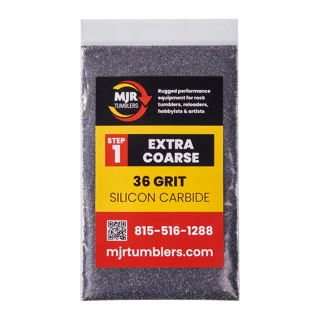 MJR 36-grade extra-coarse silicon carbide
36-grade silicon carbide for a recipe requiring the coarsest documented cut.
$15.99Nov 9, 26, 04:19 PM · New YorkAdd to cartPrice info
This is a monthly price snapshot supplied by Rainforest, not a live quote. Product prices and availability are accurate as of the date/time indicated and are subject to change. Any price and availability information displayed on Amazon.com at the time of purchase will apply to the purchase of this product.
Opens the product on Amazon. Payment takes place on Amazon.
-
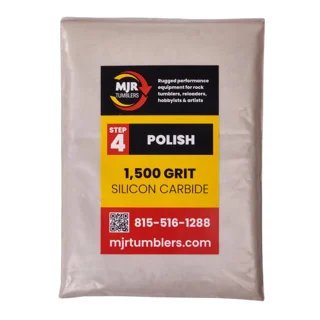 MJR 1500-grade silicon carbide polishing grit
Fine 1,500-grade silicon carbide, distinct from aluminum oxide at the same nominal grade.
$21.99Nov 9, 26, 04:20 PM · New YorkAdd to cartPrice info
This is a monthly price snapshot supplied by Rainforest, not a live quote. Product prices and availability are accurate as of the date/time indicated and are subject to change. Any price and availability information displayed on Amazon.com at the time of purchase will apply to the purchase of this product.
Opens the product on Amazon. Payment takes place on Amazon.
-
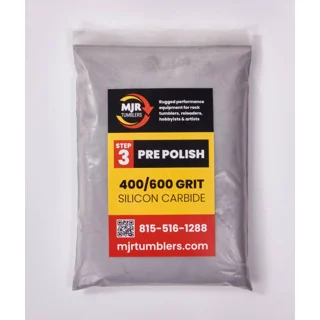 MJR 400/600 silicon carbide pre-polish
400/600-grade standalone pre-polish.
$17.75Nov 9, 26, 04:20 PM · New YorkAdd to cartPrice info
This is a monthly price snapshot supplied by Rainforest, not a live quote. Product prices and availability are accurate as of the date/time indicated and are subject to change. Any price and availability information displayed on Amazon.com at the time of purchase will apply to the purchase of this product.
Opens the product on Amazon. Payment takes place on Amazon.
-
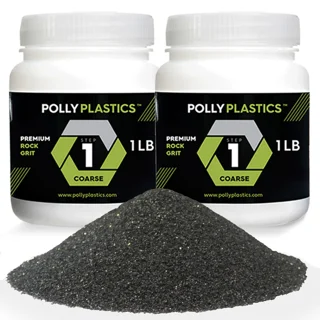 Polly Plastics 60/90 silicon carbide refill, 2 lb
Two one-pound 60/90 silicon carbide jars in the Polly system.
$24.99Nov 9, 26, 04:21 PM · New YorkAdd to cartPrice info
This is a monthly price snapshot supplied by Rainforest, not a live quote. Product prices and availability are accurate as of the date/time indicated and are subject to change. Any price and availability information displayed on Amazon.com at the time of purchase will apply to the purchase of this product.
Opens the product on Amazon. Payment takes place on Amazon.
-
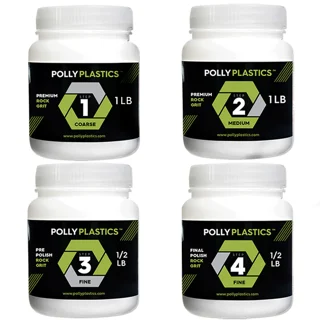 Polly Plastics four-stage grit kit without filler
Three pounds of abrasive in the four-stage kit, filler purchased separately.
$31.49Nov 9, 26, 04:21 PM · New YorkAdd to cartPrice info
This is a monthly price snapshot supplied by Rainforest, not a live quote. Product prices and availability are accurate as of the date/time indicated and are subject to change. Any price and availability information displayed on Amazon.com at the time of purchase will apply to the purchase of this product.
Opens the product on Amazon. Payment takes place on Amazon.
-
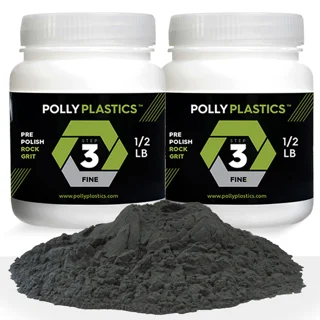 Polly Plastics 500-grit pre-polish, 1 lb
One pound total of 500-grade silicon carbide, split into two jars.
$22.99Nov 9, 26, 04:21 PM · New YorkAdd to cartPrice info
This is a monthly price snapshot supplied by Rainforest, not a live quote. Product prices and availability are accurate as of the date/time indicated and are subject to change. Any price and availability information displayed on Amazon.com at the time of purchase will apply to the purchase of this product.
Opens the product on Amazon. Payment takes place on Amazon.
-
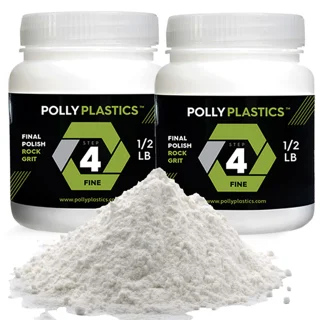 Polly Plastics 1200-grade aluminum oxide polish, 1 lb
Two half-pound jars of 1200-grade aluminum oxide.
$23.99Nov 9, 26, 04:22 PM · New YorkAdd to cartPrice info
This is a monthly price snapshot supplied by Rainforest, not a live quote. Product prices and availability are accurate as of the date/time indicated and are subject to change. Any price and availability information displayed on Amazon.com at the time of purchase will apply to the purchase of this product.
Opens the product on Amazon. Payment takes place on Amazon.
-
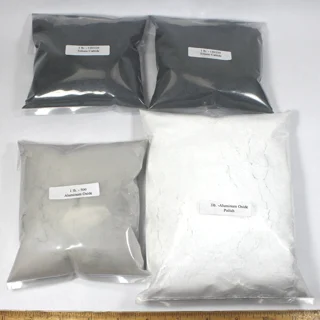 Rock Shed vibratory grit pack without filler
Vibratory abrasive pack without filler, documented as 120/220, 500 pre-polish and 8000 aluminum oxide.
$25.50Nov 9, 26, 04:22 PM · New YorkAdd to cartPrice info
This is a monthly price snapshot supplied by Rainforest, not a live quote. Product prices and availability are accurate as of the date/time indicated and are subject to change. Any price and availability information displayed on Amazon.com at the time of purchase will apply to the purchase of this product.
Opens the product on Amazon. Payment takes place on Amazon.
What to check
Compare what the stage contains
A coarse-to-polish rotary assortment may include a coarse silicon carbide grade, a medium grade, a fine pre-polish and a separate final compound. Match the actual grade and compound to the steps you need rather than using the packet number on its own.
Check the vibratory sequence
The manufacturer or supplier may provide a different sequence for vibration. Use the grades that are approved for your machine and the state of your stones. Compare the included quantities and the instructions in the selected pack.
Questions before buying
Should I buy a full kit when only the second grade runs out?
A single-grade refill is useful when the rest of the set is still stocked. Match the grit and compound to your existing instructions, then compare the total weight in the package. For a new machine, check its instructions before moving a rotary recipe into a vibratory bowl.
Does 1500 identify a single material?
No. The catalogue includes 1500-grade silicon carbide and 1500-grade aluminum oxide. Check both the grade and material in the instructions before buying a refill.
How should I compare the amount in two grit kits?
Check powder weight per stage. A kit sold for a three-pound barrel describes an intended machine size, while a jar sold as one pound describes its contents.